Discover Our Dry Eye Clinic


Do your eyes often feel dry, gritty, watery, or sore, for apparently no reason? You’re not alone. Suffering from dry eye has become one of the most common reasons people visit their optician. But we have very good news – dry eye syndrome is also one of the most treatable conditions. At John Fell Opticians, we’re proud to offer a dedicated Dry Eye Clinic, designed to help you finally get the comfort and clarity of vision that you deserve.
Modern life isn’t always kind to our eyes. More and more of us spend long hours on screens, work in air-conditioned environments, and deal with busy, demanding lifestyles. As a result, dry eye symptoms are cropping up earlier and more frequently. Thankfully, major advancements in technology are keeping pace, allowing us to diagnose dry eye more accurately than ever – both identifying the exact cause and helping us to offer tailored, effective solutions.
In this detailed guide, we’ll walk you through everything you need to know about dry eye syndrome, how it is diagnosed, the latest treatment options available at our Ashbourne, Mickleover and Castle Donington opticians, and what you can expect when you visit one of our Dry Eye Clinics. Whether you’re looking for the best local dry eye treatment, or an assessment to help you find relief from ongoing discomfort, you’re in the right place.
What Is Dry Eye Syndrome?
Dry Eye Syndrome (often simply called “dry eye”) happens when your eyes don’t produce enough tears, or when your tears evaporate too quickly to keep your eyes properly lubricated. Despite the name, dry eye can cause a wide variety of symptoms –many of which don’t feel “dry” at all.
Healthy eyes rely on a stable tear film made up of three layers:
- Oil layer (lipid layer) – stops the tears evaporating too quickly.
- Water layer (aqueous layer) – keeps the eye hydrated.
- Mucus layer (mucin layer) – helps tears spread evenly across the surface of the eye.
When any one of these layers isn’t working as it should, symptoms develop. Because dry eye has several different causes, it’s not a one-size-fits-all condition, which is exactly why a specialist clinic is so important.
Unfortunately, dry eye doesn’t typically resolve on its own. It requires an accurate diagnosis and targeted treatment, which our clinic is specifically designed to provide.

Symptoms and Causes
Dry Eye Syndrome can affect people of all ages and lifestyles, and the symptoms can vary significantly. Some people experience mild but persistent irritation, while others may struggle with more disruptive symptoms that affect daily life.
- Common symptoms of dry eye include:
- A gritty or sandy feeling in the eyes
- Stinging, burning, or soreness
- Excessive watering
- Blurred or fluctuating vision
- Sensitivity to light
- Redness
- Difficulty wearing contact lenses
- Tired or heavy eyes
Many people are surprised to learn that watery eyes are actually a sign of dryness – it’s a symptom that feels completely at odds with the disease! When the eyes feel irritated or unprotected, they produce watery tears as a reflex. Since these tears don’t contain the oils needed to keep the tear film stable, however, the dry eye issue continues. More dryness leads to more tears, continuing the cycle until you can find a lasting, effective treatment.
Common causes of dry eye include:
- Prolonged screen use
- Air conditioning or heating systems
- Hormonal changes (especially during menopause)
- Ageing
- Certain medications
- Contact lens wear
- Allergies
- Environmental factors (wind, pollution, dry air)
- Medical conditions such as rosacea or blepharitis
Understanding the underlying cause is the key to successful treatment – which is where our modern, advanced diagnostic tools come in.
Why Dry Eye Is Becoming More Common
If you feel like more people than ever are complaining about irritated or watery eyes, you’re right. Dry eye has become one of the fastest-growing concerns in eye care, and there are several reasons for this trend.
1. Screen time has skyrocketed
Research shows that we blink up to 60% less when looking at screens. Blinking is essential because it spreads the oily layer of the tear film across the surface of the eye. Fewer blinks = poorer tear quality.
2. Modern indoor environments are dry
Offices, cars, and even home heating systems often create low-humidity environments that cause tears to evaporate more quickly.
3. An ageing population
As we get older, tear production naturally decreases. With many people now leading active, screen-heavy lifestyles well into later life, dry eye is becoming more prevalent.
4. Contact lenses are more popular than ever
Although many contacts today are designed to retain moisture, wearing them for long hours can still contribute to dryness.
5. Increased awareness
People today are more willing to seek help for eye comfort issues, which means more cases are being diagnosed. The good news? More awareness also means more effective solutions are available.

How Dry Eye Is Diagnosed at John Fell Opticians
A proper diagnosis is the foundation of effective dry eye treatment. Many over-the-counter drops offer only temporary relief because they don’t address the underlying problem. At our Dry Eye Clinic, we use advanced diagnostic technology – including the latest equipment from the leading ophthalmic brand Essilor – to identify exactly what’s causing your symptoms.
Below are some of the specialist assessments we may use:
1. Tear Film Analysis
Using state-of-the-art instruments, we evaluate the quality and stability of your tear film. This helps us determine whether your dryness is caused by low tear volume, rapid evaporation, or poor tear composition.
2. Meibomian Gland Imaging
The Meibomian glands, located along your eyelids, are responsible for producing the oils that prevent tear evaporation. Blocked or dysfunctional glands are one of the most common causes of dry eye (known as Meibomian Gland Dysfunction or MGD). Modern imaging allows us to see the glands clearly and assess whether they’re healthy or blocked.
3. Lipid Layer Assessment
Using non-invasive tools, we measure the thickness of your tear film’s oily layer to understand how quickly your tears evaporate.
4. Tear Breakup Time (TBUT)
This test shows how long your tears remain stable before the surface of the eye begins to dry.
5. Osmolarity Testing
A highly accurate way of assessing inflammation and tear concentration, giving us insight into chronic or severe dryness.
These diagnostic tools allow us to determine:
- The type of dry eye you have
- What is causing it
- How advanced the condition is
- Which treatment will work best for you
No two eyes are the same, which is why our approach is completely personalised.
Treatment Options Available
At our Dry Eye Clinic, we offer a wide range of treatments designed to provide long-lasting relief, not just temporary moisture. One of our highly skilled optometrists in our Ashbourne, Mickleover or Castle Donington locations will build a tailored treatment plan based on your test results, symptoms, lifestyle, and severity.
1. Advanced Device Treatments
- ACTIVA – This is a sophisticated eye-mask device that uses controlled heat (typically around 42 °C) combined with gentle automatic massage to stimulate the Meibomian glands and help unblock and express their oil output, restoring a healthier lipid layer in the tear film.
- E Eye (IRPL® Technology) – A cutting-edge pulsed-light treatment specifically tailored for Meibomian Gland Dysfunction (MGD). The device emits regulated light pulses around the lower eyelids that stimulate the nerves controlling the glands, improving their secretion and improving tear film stability.
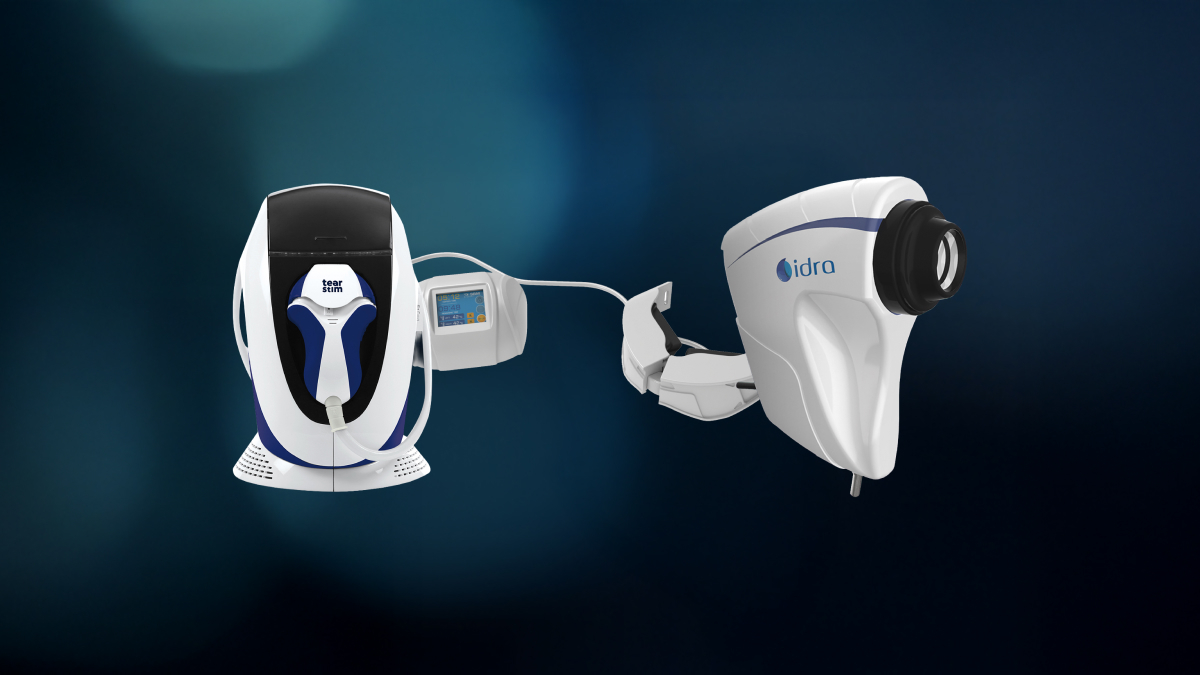
- TearStim – Another light-pulse-based therapy designed for rapid improvements in dry eye discomfort. It is easy to administer, with treatment times measured in minutes, and offers relief by restoring the lipid layer of the tear film and improving gland secretions.
- IDRA – While not strictly a “treatment” device, this advanced diagnostic suite underpins our treatment decisions by analysing tear film structure, Meibomian gland morphology, lipid layer thickness, blink patterns and more. By knowing exactly why your tear film is unstable, we can tailor the right therapy.
2. Lifestyle Adjustments
Treatment success depends as much on what you do at home as on what we do in the clinic. We’ll work with you to incorporate simple but effective changes, such as:
- Taking regular breaks from screens (every 20–30 minutes) and intentionally blinking fully to refresh the tear film.
- Ensuring your work or living environment is not too dry (consider a humidifier or avoid direct airflow on your face).
- Wearing wrap-around or protective glasses when outdoors or in windy/dusty conditions.
- Hydration, a balanced diet rich in omega-3 fatty acids, and avoiding smoking, which can worsen tear-film dryness.
- Proper eyelid hygiene if you have blepharitis or eyelid crusting (this complements our higher-level treatments).
3. Advanced Therapies
For more complex cases, we may work in conjunction with other medical professionals. Options might include:
- Specialist drops or prescription medications (e.g. anti-inflammatories, autologous serum)
- Punctal plugs to reduce tear drainage
- In-clinic procedures beyond our technology suite
- Ongoing monitoring for patients with systemic conditions that affect the ocular surface
Our goal is not just to soothe your symptoms, but to correct the underlying cause and provide a comprehensive management plan. By blending advanced technologies, lifestyle support and specialist referral when needed, we can help you achieve long-term comfort and protect the health of your eyes for many years to come.
What Happens During a Dry Eye Clinic Appointment?
At any John Fell Optician, your appointment will be relaxed, friendly, and entirely centred around helping you feel comfortable again. Here’s what you can expect:
1. A detailed conversation about your symptoms
Your optometrist will take time to understand what you’re experiencing, when your symptoms occur, and how they affect your daily life.
2. A thorough eye examination
We’ll check the health of your eyes and eyelids, assess your tear quality, and evaluate your blinking patterns.
3. Advanced diagnostic tests
Using our innovative Essilor dry eye technology, we’ll take high-resolution images and assessments to pinpoint the cause of your dryness.
4. Clear explanation of your results
We’ll show you exactly what we found, explain your type of dry eye, and answer any questions you may have.
5. Tailored treatment plan
Your optometrist will build a personalised treatment plan that suits you: your lifestyle, your symptoms, and your eye health.
6. Follow-up and ongoing support
Dry eye is a chronic condition, but with the right management, it can be significantly improved. We’ll monitor your progress and adjust your treatment as required.
Every appointment with us is designed to be reassuring, informative, and focused on finding the best solution for you and your lifestyle, so you can take full control of your eye health and comfort.
Why Early Intervention Matters
Dry eye won’t go away, and even if you’ve learned to live with it, it’s a condition that can gradually worsen if left untreated. Early intervention helps to:
- Protect the surface of the eye
- Prevent long-term inflammation
- Avoid damage to the Meibomian glands
- Improve contact lens comfort
- Maintain clear, stable vision
- Prevent chronic discomfort
The sooner we diagnose your dry eye, the easier it is to treat and the better your long-term results will be. Many people delay seeking help, assuming dryness is simply something they must “put up with.” But with today’s modern diagnostic tools and targeted treatments, there is absolutely no need to suffer in silence.
Take the First Step Toward Comfortable, Healthy Eyes
If you’re experiencing gritty, watery, tired, or irritated eyes on a regular basis, we’re here to help. Our Dry Eye Clinic combines expert care with the latest technology to diagnose the root cause and create a personalised plan that genuinely works in the long term.
There is no need to endure ongoing discomfort – effective dry eye treatment is available right here in Derbyshire at our Ashbourne, Mickleover and Castle Donington clinics.
Ready for lasting relief? Book your Dry Eye Assessment today.